What
What is the paper really saying?
The title is Useful Memories Become Faulty When Continuously Updated by LLMs. The paper examines Agentic Memory: an LLM agent stores trajectories, failures and successful experience as reusable memory, then retrieves that memory in future tasks.
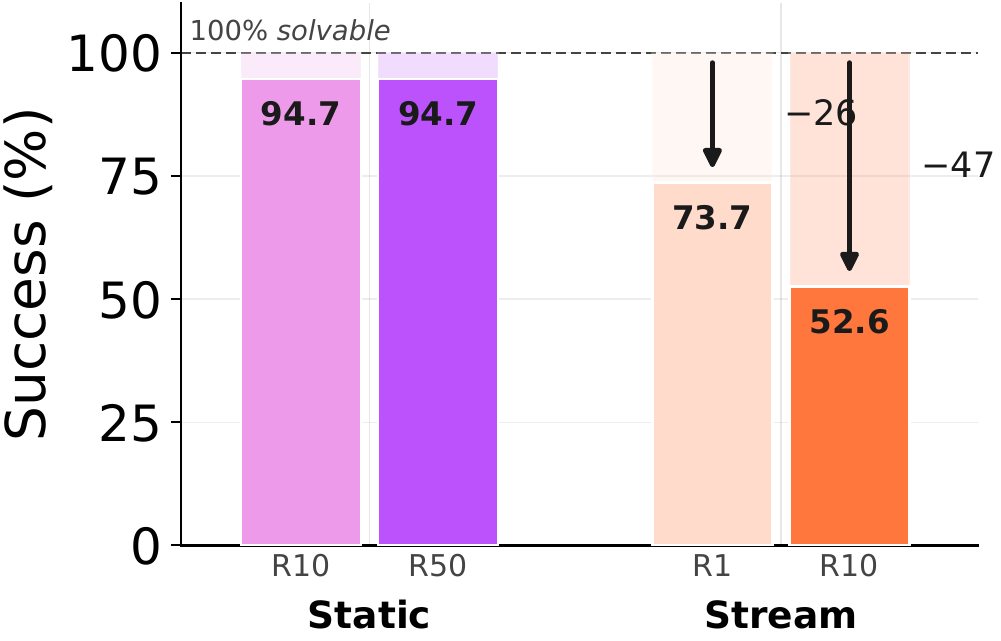
The paper’s cold conclusion is that today’s LLMs are not reliable memory consolidators. They can benefit from individual episodes, but repeated consolidation can erase details, create pseudo-rules, blur applicability conditions and turn useful experience into misleading memory.
Why
Why study this? Because many agent-memory systems assume consolidation is always helpful.
Recent agent-memory systems often share a default loop: after a task, hand the trajectory to an LLM, summarize it into natural-language memory, and feed that memory back into the next task. This appears in Reflexion, ExpeL, CLIN, Agent Workflow Memory, ACE and Dynamic Cheatsheet in different forms.
The hidden danger is that every summary is a lossy rewrite. The model decides which details to preserve, which to ignore, which episodes to merge and which rules to generalize. Once that judgment is biased, memory becomes a new noise source rather than faithful compression.
Surface question
If agent memory keeps accumulating, why does performance not rise steadily—and sometimes fall?
Deeper question
Can an LLM reliably decide what to abstract and what must remain episodic evidence?
How
The method: separate experience quality from consolidation strategy.
The paper does not simply compare memory versus no memory. It controls experience source, consolidation schedule and memory form, so it can locate whether the failure comes from bad experience or from the consolidation process itself.
| Dimension | Control | Question |
|---|---|---|
| Experience quality | successful trajectories and even ground-truth solutions | If correct experience hurts after consolidation, can we still blame noisy data? |
| Schedule | Static-All / Static-Group / Stream | Does the same trajectory pool produce different memory under different consolidation orders? |
| Memory form | abstract lesson-style memory versus raw episodic trajectories | Does compressed advice reliably beat original evidence? |
Three consolidation modes
- Static-All: consolidate all trajectories at once.
- Static-Group: group by task type, consolidate separately, then merge.
- Stream: update memory batch by batch, matching realistic long-running agents.
ARC-AGI Stream: a controlled autopsy environment
ARC-AGI Stream provides task-family taxonomy, programmatic ground truth and auditable memory operations: Retain, Delete and Consolidate. It makes it possible to see whether the model merges unrelated tasks, over-compresses or overwrites an old task family.
Experiments
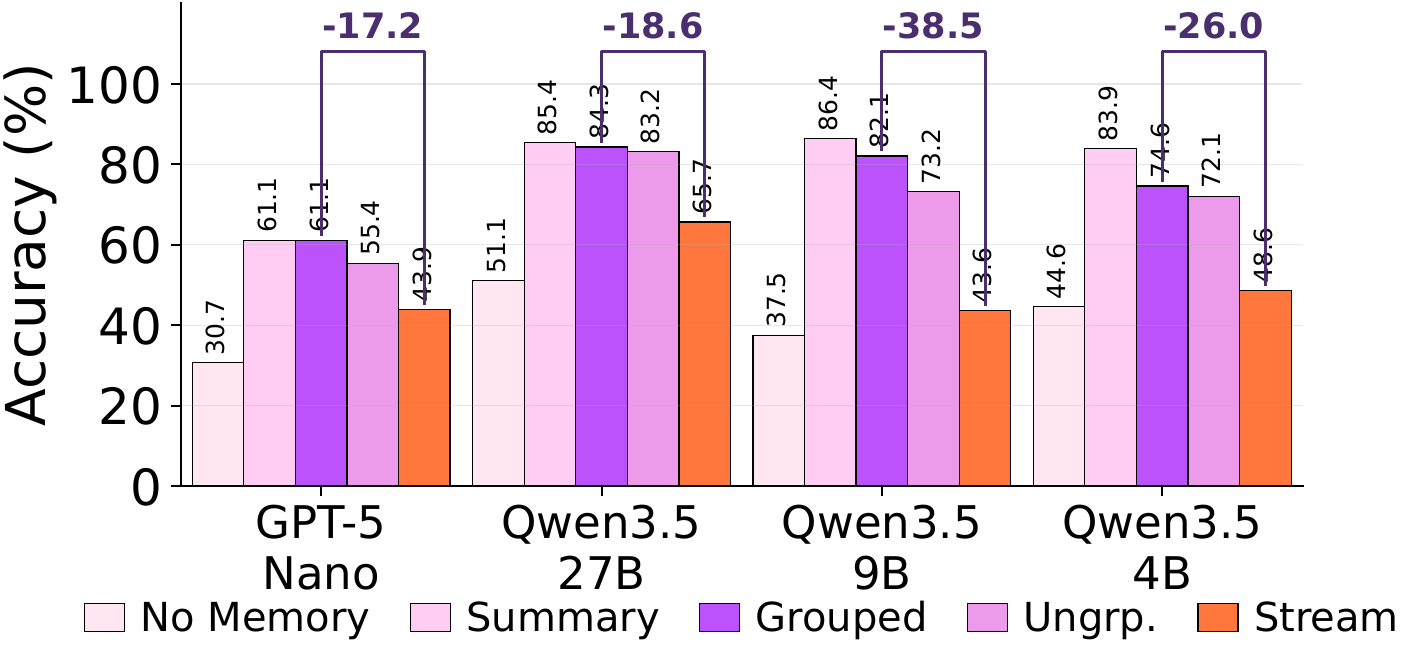
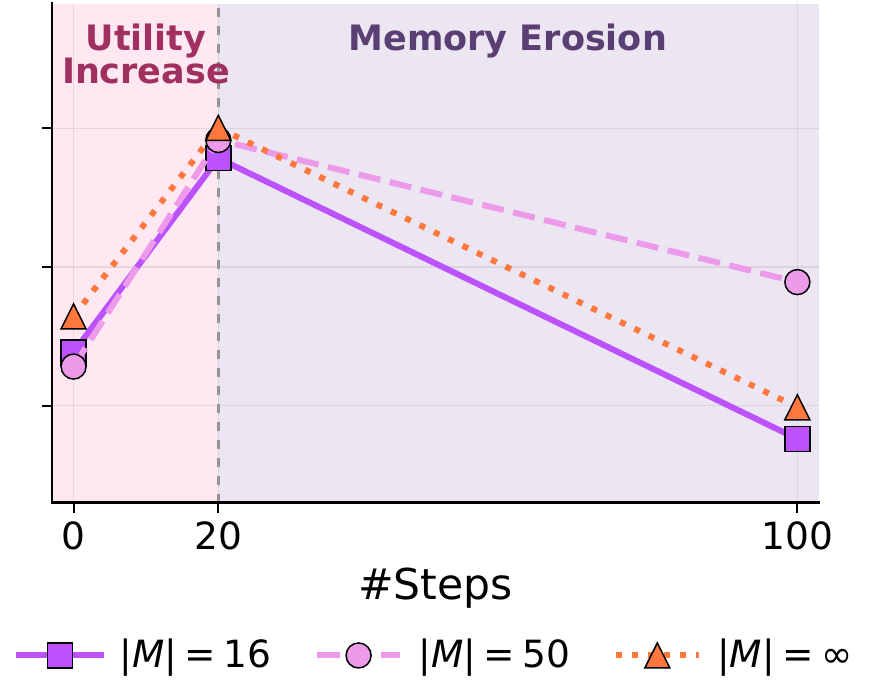
Results: memory utility is not monotonic; continual updates can erode it.
1. ScienceWorld and WebShop: gains rise early, then decay.
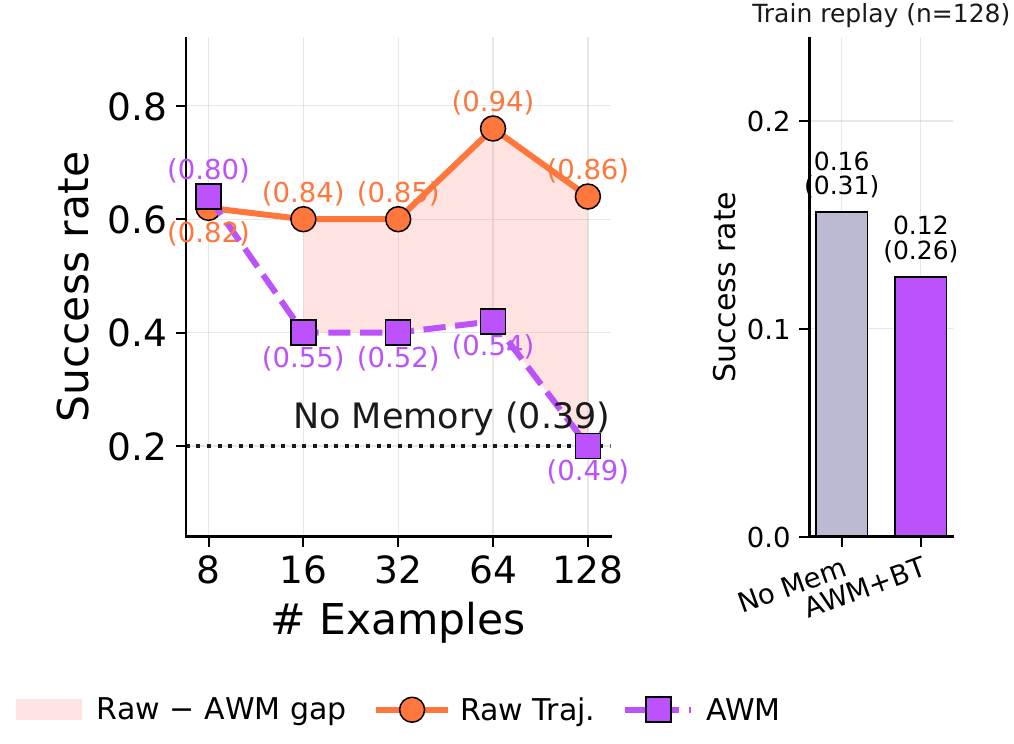
In ScienceWorld, abstract memory initially helps and then declines as updates accumulate. WebShop shows a similar pattern: AWM-style abstract memory helps at small scale, then loses its advantage and approaches the no-memory baseline.
2. ARC-AGI: correct experience can still be consolidated into failure.
The ARC-AGI experiment is the cleanest counterexample: the input is not failed trajectories or dirty data, but ground-truth solutions. Performance still drops after streaming consolidation.
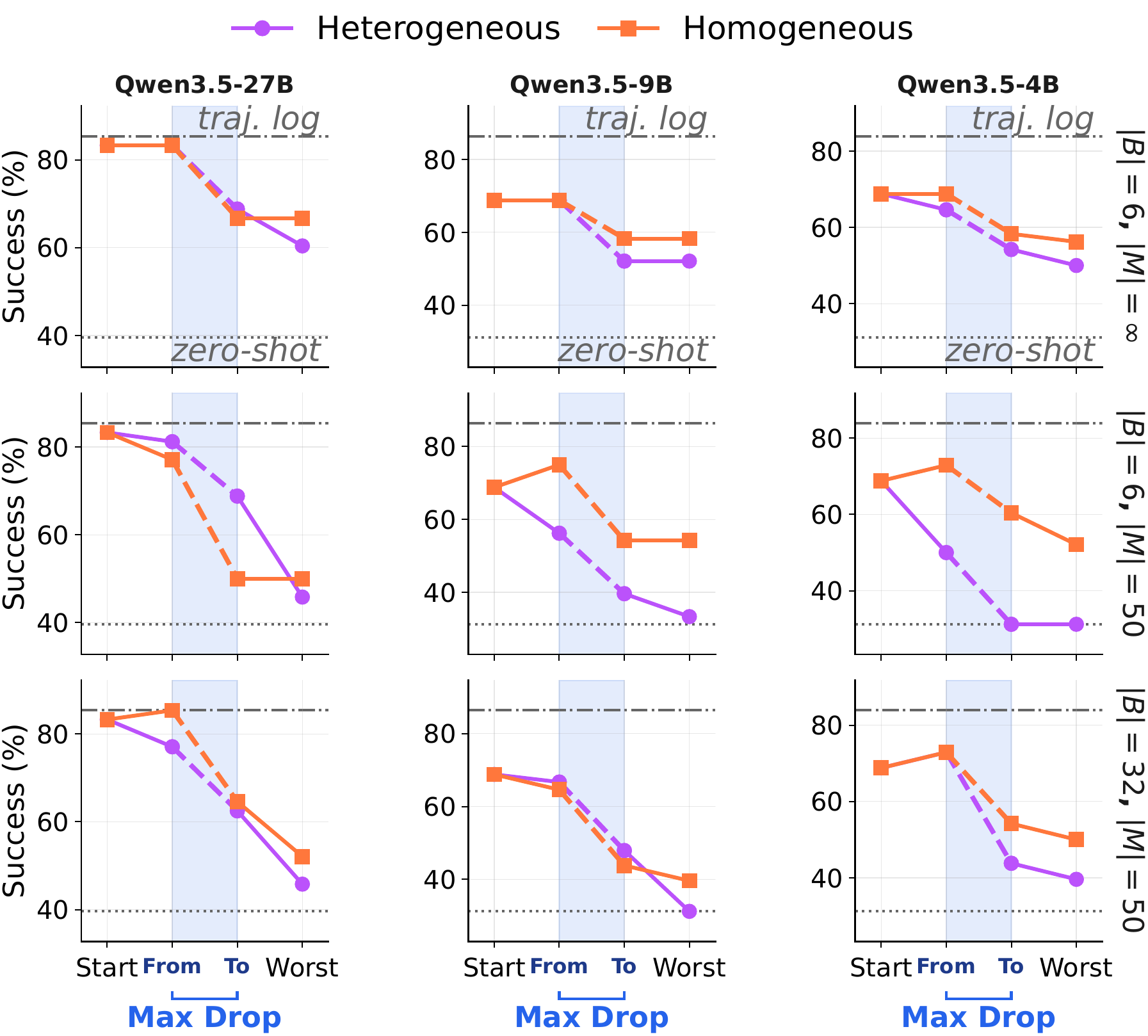
3. ALFWorld: heterogeneous batches accelerate erosion.
When a batch mixes task types, the model is more likely to merge unrelated experience into seemingly general rules. Grouping by task family helps, but it does not remove the risk of repeated rewriting.
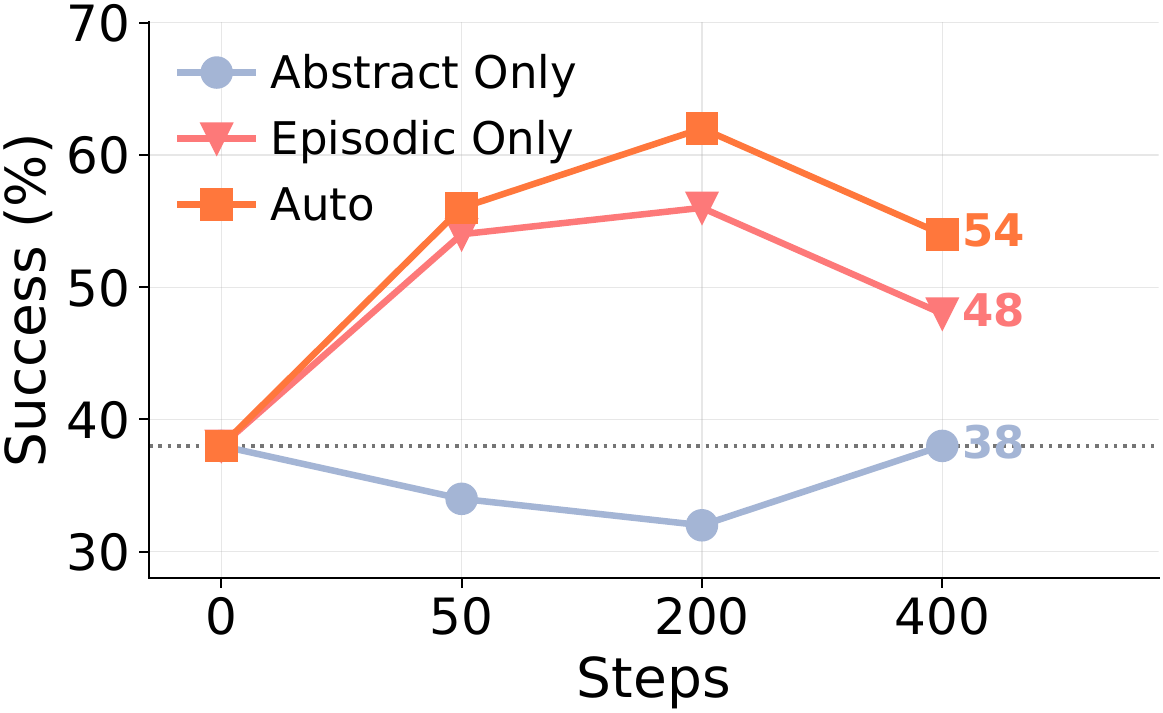
4. Episodic-only is a strong baseline.
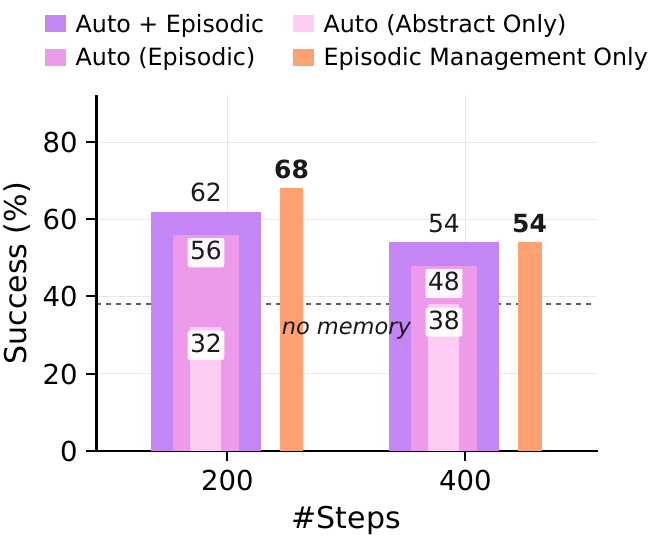
On WebShop, ALFWorld and AppWorld, simply keeping raw trajectories as in-context demonstrations can compete with lesson-style abstract memory. Abstract memory does not reliably beat original evidence.
Mechanism
Why memory breaks: three failure modes.
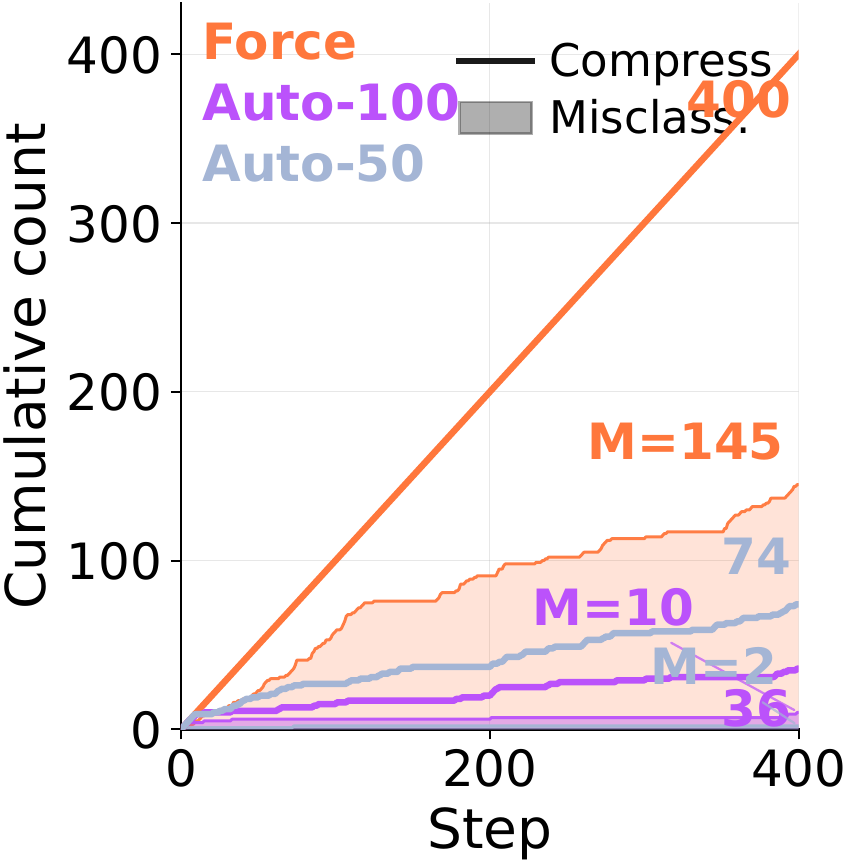
1. Misclassification: summarizing before episodes are correctly grouped.
Abstraction only works when grouped episodes really share structure. In a stream, the LLM often has too little evidence and merges different task families into false general rules.
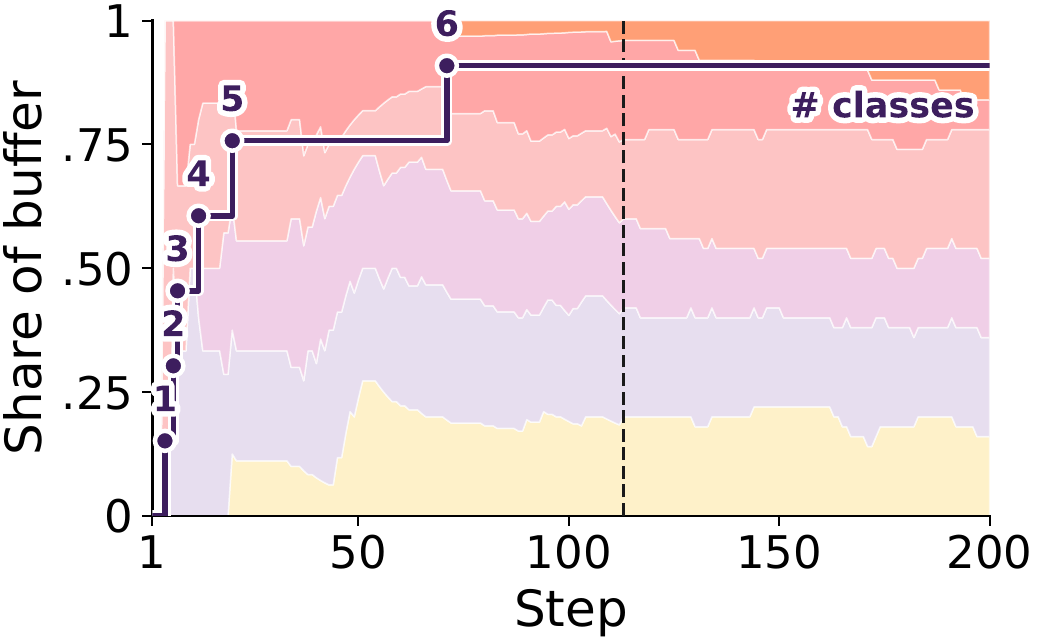
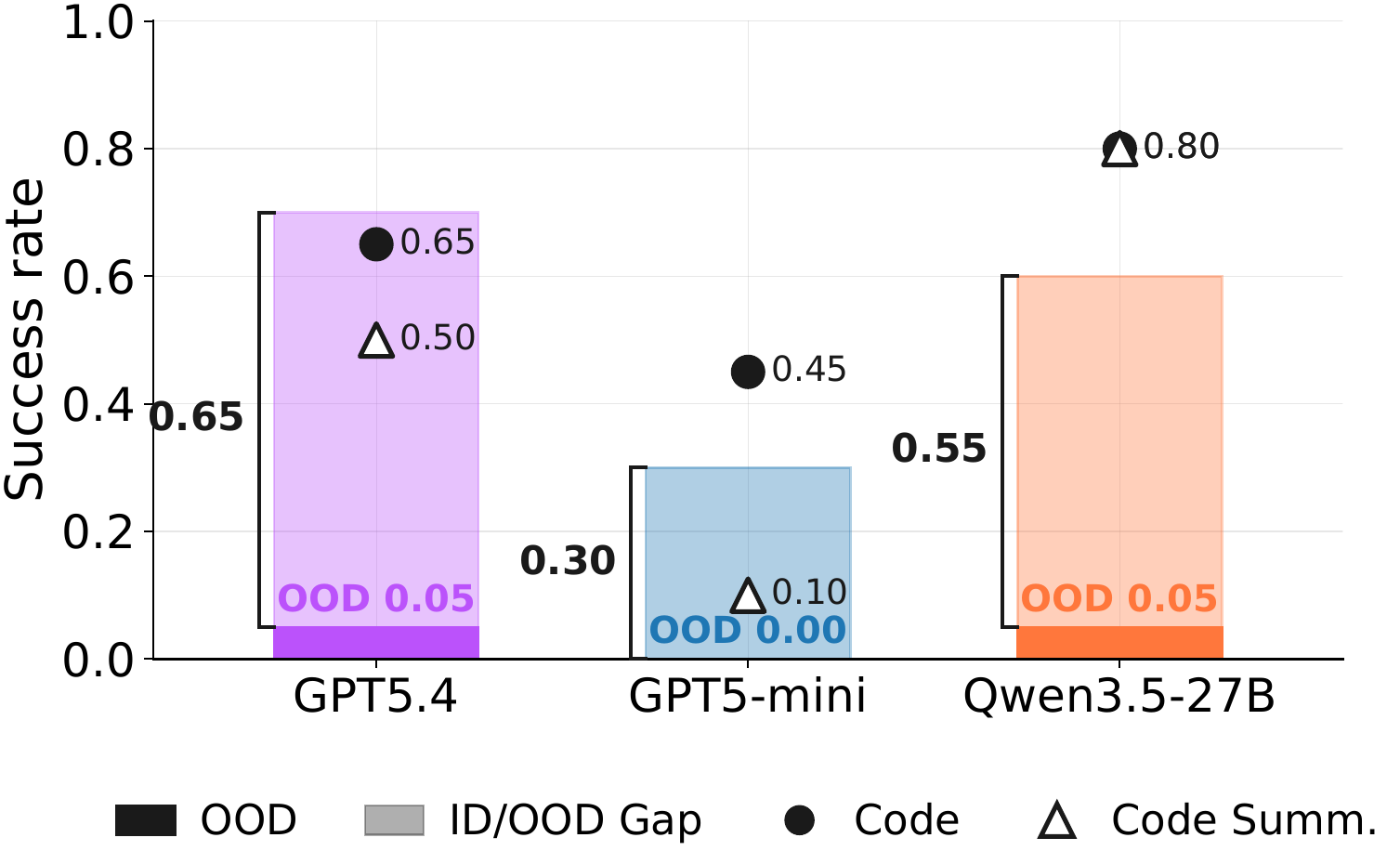
2. Over-generalized interference: smart-looking rules lose their boundaries.
The dangerous memories are not always nonsense. They are often plausible rules with missing boundary conditions, which mislead the agent on adjacent but different tasks.
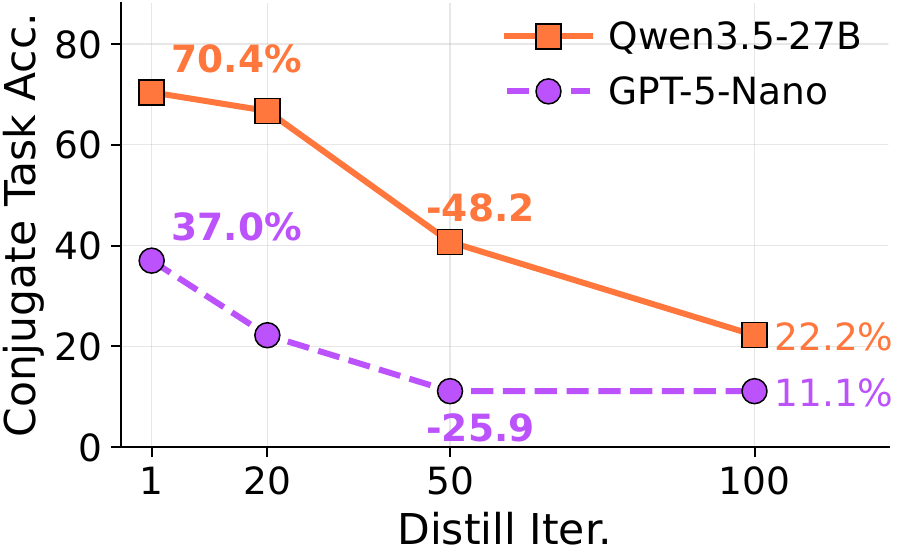
3. Narrow-stream overfitting: memory learns surface regularities.
If the stream stays inside one strategy family, memory can become overspecified: it helps seen tasks but generalizes poorly to variants.
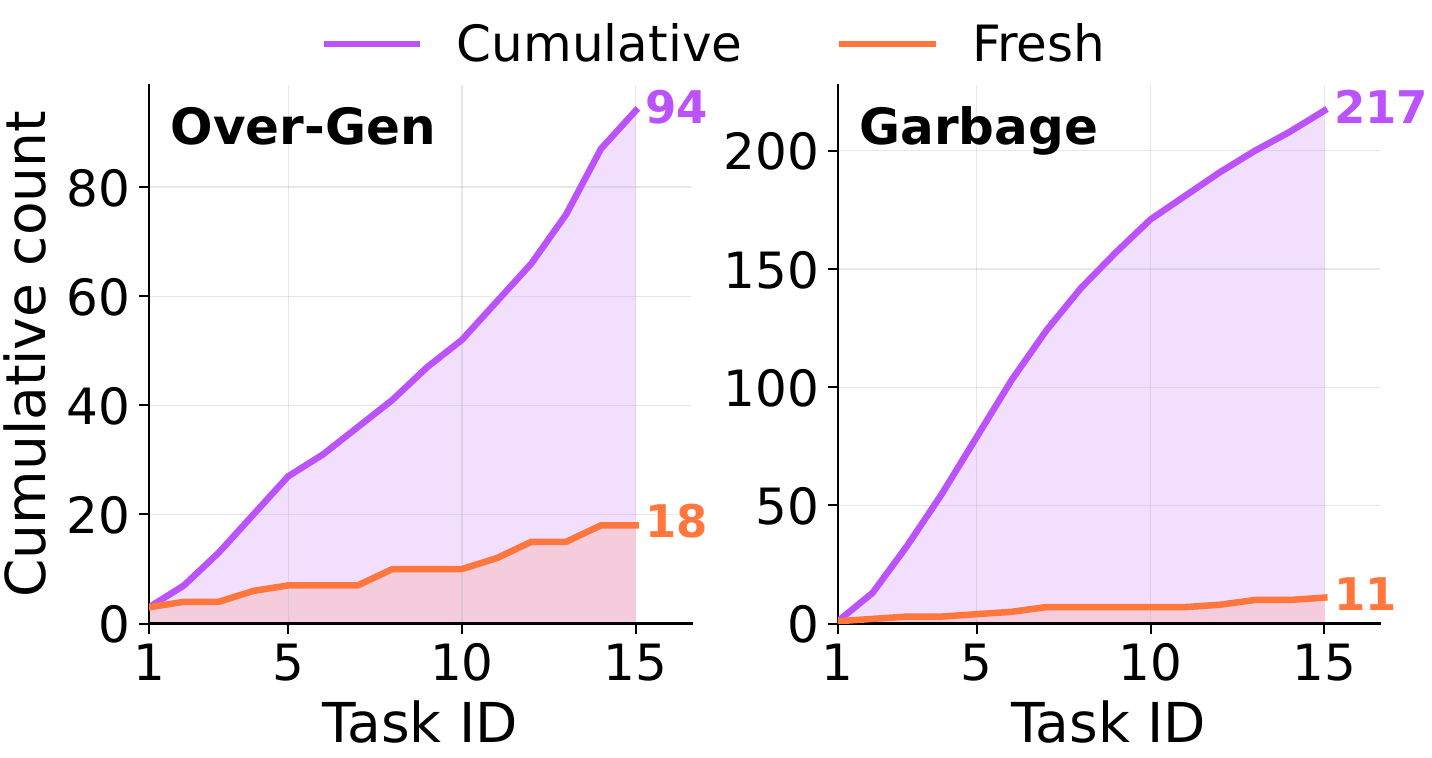
Task switching accumulates garbage memory.
In ScienceWorld task-switching sequences, cumulative memory underperforms fresh per-task memory. LLM-judged over-generalized and garbage memories keep accumulating.
So What
Engineering lesson: raw episodes are not disposable fuel.
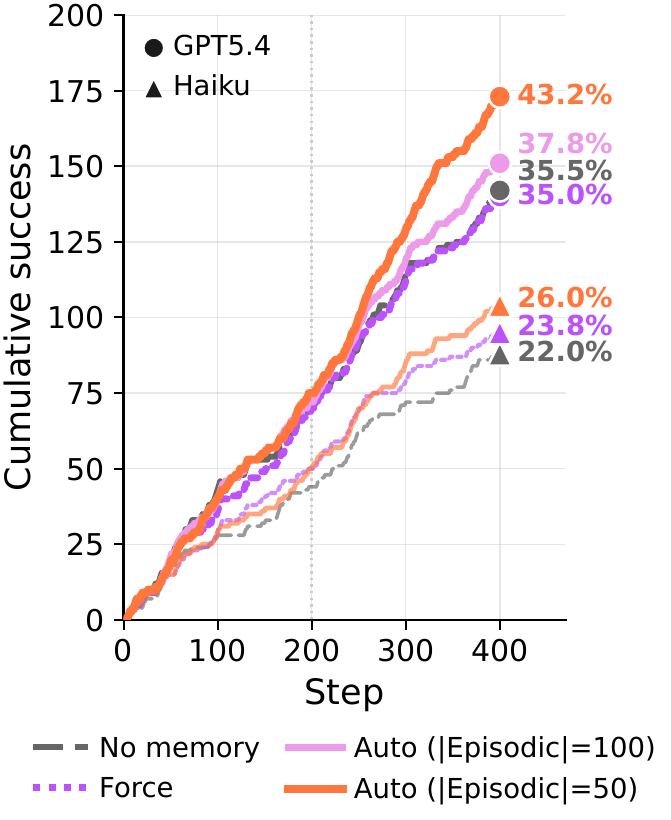
The paper does not say agents should not have abstract memory. It says abstraction should not be forced after every interaction; raw episodes should not be discarded after summarization; abstract and episodic stores should be separated.
Architecture suggestions
- Keep an episodic store: raw trajectories, inputs, actions, feedback and failure points.
- Gate abstraction: summarize only when evidence is sufficient and boundaries are explicit.
- Make abstractions traceable: each lesson should point back to supporting episodes.
- Use episodic-only as a baseline before claiming compressed memory works.
Takeaway
What makes this paper important.
The paper attacks an assumption inside many agent-memory systems: that LLM-generated summaries will stably preserve useful structure from experience. Under current models and natural-language memory, that assumption is unreliable.
The more stable direction is evidence retention plus selective abstraction plus traceable verification: keep raw episodes first, form schemas slowly, and treat abstraction as an operation that must prove it is worth doing.
